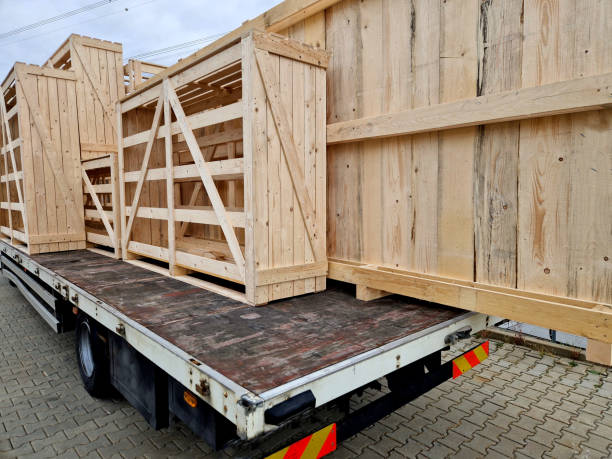
Do You Need a Custom Crate? How to Move Art, Antiques, and Glass Safely
An item needs a custom crate when it fails any of three tests: it can’t be replaced, it can’t protect itself, or it can’t fit standard packing materials. Most household belongings pass all three and move safely in boxes and blankets. The pieces that fail even one, original art, antiques, large mirrors, stone tops, sculptures- deserve a rigid structure built to their exact dimensions. This guide walks through the three tests, the insurance math most people never hear, and what proper crating actually involves. NuWay Relocation is a veteran-owned Durham-based mover (NCUC C-3093, USDOT 4270123, MC-1658232) that builds custom crates as part of local, long-distance, and interstate moves.
Key Takeaways
Most items don’t need a crate. Boxes, paper, and moving blankets handle the majority of a household correctly. Crating is for the exceptions, and knowing which is which saves money in both directions.
Three tests decide it: replaceability, structure, and fit. Irreplaceable, fragile, or irregular items are the crate candidates.
Signing the cheap coverage option caps a painting’s payout at its weight. Released value protection pays 60 cents per pound, so a 40-pound painting is covered for $24 regardless of its value, which is why prevention (crating) plus proper valuation coverage is the real protection strategy for expensive pieces.
A real crate is designed, not assembled. The item is measured, the crate built around it, and the piece suspended or braced so it cannot shift.
Raleigh’s humidity is part of the equation. Wood, canvas, and veneer react to moisture swings, which matters for crating choices and for any storage stop along the way.
Book crating 1 to 2 weeks before moving day. Assessment, design, and construction can’t happen while the truck idles in the driveway.
The Three Tests: Does This Item Actually Need a Crate?
Test 1: Can it be replaced? A flat-pack bookcase and a big-box TV are replaceable; if the worst happens, money fixes it. An original painting, a signed piece, a family antique, or custom furniture cannot be re-bought at any price. For irreplaceable items, the question stops being “what does protection cost” and becomes “what does failure cost.” Test 2: Can it protect itself? Solid wood furniture wrapped in blankets absorbs normal transit contact fine. Glass, mirrors, marble and stone tops, ceramics, plaster frames, and canvas cannot; they need a rigid structure to take the contact for them. If pressing on the item’s surface could damage it, wrapping alone is not protection. Test 3: Does it fit standard materials? Boxes come in known sizes, and specialty boxes exist for artwork and TVs up to common dimensions. A 7-foot mirror, an irregular sculpture, a chandelier, or an oversized canvas doesn’t fit anything off the shelf, and an oversized box with empty space is worse than no box: room to move is room to break. Fail one test, talk to your mover about the item. Fail two or three, plan on a crate.
The Insurance Math Nobody Mentions
Here’s the part that turns crating from an upsell into a strategy. On interstate moves, federal law makes Full Value Protection the default, but movers also offer a no-cost option called released value protection, which you choose by signing a written waiver, and it pays a maximum of 60 cents per pound, per article. Plenty of people sign that waiver to save money without running the numbers on their actual valuables:
A 40-pound original painting: covered for $24
A 100-pound antique dresser: covered for $60
A 30-pound sculpture: covered for $18
The item’s actual value is irrelevant under that option; only weight counts. Full Value Protection is the default unless you waive it in writing, and even it works better as a backstop than a plan, because no payout un-breaks an heirloom. For high-value pieces the sound approach is both: prevent damage with proper crating, and carry coverage that reflects real value. Our interstate moving guide explains the valuation options in detail. For moves within North Carolina, ask about valuation choices when you book; the same logic applies even where the rules differ.
What Typically Gets Crated, and What Doesn’t
Usually needs a crate
Usually fine with standard packing
Original paintings and large framed art
Small framed prints and photos (artwork boxes)
Mirrors and glass panels beyond specialty-box sizes
Standard mirrors that fit mirror cartons
Marble, granite, and glass tabletops
Solid wood tables (blankets, pads, disassembly)
Sculptures, ceramics, and irregular fragile pieces
Everyday decor, wrapped and boxed
Antiques with delicate finishes, veneer, or inlay
Sturdy modern furniture
Chandeliers and light fixtures with fragile elements
Standard lamps (lamp boxes)
Very large or specialty TVs and studio equipment
Common TV sizes (TV boxes with foam)
Notice how short the honest crate list is. A mover who wants to crate half your house is selling wood; a mover who talks you out of crating a stone tabletop is selling risk. The right answer is item by item, which is exactly what the three tests are for.
What Proper Crating Actually Involves
A custom crate is closer to carpentry than packing:
Assessment and measurement. Dimensions, weight, fragile points, surface sensitivity, and how the item will be handled and transported.
Design around the item. The crate is sized to the piece with deliberate clearances for padding and bracing, not a generic box picked from stock.
Construction and internal support. Rigid walls take exterior contact; foam, bracing, or suspension inside keeps the item from moving at all. Immobility is the whole point: an item that can’t shift can’t build momentum.
Inspection and secure placement. Fit and closure are checked before the item goes in, and the sealed crate is loaded and coordinated as part of the move plan, not as an afterthought riding wherever there’s room.
The Raleigh Factor: Humidity
Triangle summers are humid, and wood, canvas, veneer, and antique glues all respond to moisture swings by expanding, contracting, or lifting. That matters twice: crating materials and padding should suit the piece, and if your move includes a holding period, an heirloom should wait in climate-controlled storage, not a garage or a standard unit in August. If a crated item will be stored between homes, say so up front so the plan covers it.
When to Arrange It
Crating needs lead time for assessment, design, and construction, so flag specialty items when you book the move, ideally 1 to 2 weeks before moving day. The practical prep on your side takes minutes: list your fragile, valuable, or oversized pieces, note rough dimensions, photograph current condition, and mention anything with a delicate finish or unusual construction. Crating also pairs naturally with professional packing for the rest of the fragile rooms, and with long-distance moving, where extra miles and extra handling raise the stakes.
Frequently Asked Questions
How do I know if my item needs a custom crate?
Apply three tests: can it be replaced, can it protect itself, and does it fit standard packing materials? Items that fail one test deserve a conversation with your mover; items that fail two or more, like original art, stone tops, large mirrors, and delicate antiques, are strong crate candidates.
Is custom crating worth it for a local move?
For items that fail the three tests, yes. A fragile sculpture doesn’t know whether it’s traveling 5 miles or 500; it knows whether it’s braced. Distance adds handling and time, which raises the stakes, but the item’s fragility and value are what decide the question.
Does moving insurance cover valuable artwork?
Not if you’ve signed it away. On interstate moves, Full Value Protection is the federal default, but the no-cost released value option many people elect in writing pays at most 60 cents per pound per item, so a 40-pound painting is covered for $24 regardless of its value. For irreplaceable pieces the best strategy is prevention through proper crating plus coverage that reflects real value.
What is a custom crate made of?
A rigid outer structure, typically wood, built to the item’s measured dimensions, with internal foam, padding, bracing, or suspension arranged around the specific piece. The outer shell absorbs contact; the interior keeps the item from shifting at all.
Can crated items go into storage?
Yes, and for gaps between homes that’s often the safest place for them. For wood, canvas, and antiques in the Raleigh climate, use climate-controlled storage so humidity swings don’t do slowly what a drop would do quickly. Mention storage plans when the crate is designed so materials and sealing suit the longer hold.
Protect the Things That Can’t Be Replaced
Most of a move is logistics. A few items in every home are something more: the painting you’ve had for twenty years, the table that came from a grandparent, the mirror that fits nowhere and matters anyway. NuWay Relocation assesses, designs, and builds custom crates for exactly those pieces and coordinates them within the larger move, local, long-distance, or interstate, so your most valuable belongings get engineering instead of hope.
Request a quote or call (919) 275-0314 and tell us about the piece. We’ll tell you honestly whether it needs a crate, and build it right if it does.
About the Mover
NuWay Relocation is a veteran-owned and operated moving company based in Durham, NC, serving Raleigh, Durham, Cary, Apex, Morrisville, and Fayetteville, with 20+ years of combined industry experience across local, long-distance, and interstate household moves, including custom crating and specialty-item handling. Licensed by the North Carolina Utilities Commission (NCUC C-3093) and federally authorized for interstate household goods (USDOT 4270123, MC-1658232). Valuation figures cited above come from federal regulations governing interstate moves (49 CFR Part 375); coverage terms vary by move type and should be confirmed in writing. This article is general information, not legal advice.